Unlocking Procurement Expertise with AI Agents: Your Questions Answered
Q&A exploring how trusted AI agents scale procurement expertise by analyzing data and subtle signals, helping managers handle thousands of suppliers efficiently.
In a mid-market manufacturing company, a senior procurement manager expertly handles supplier requalification for about 200 suppliers, using data like delivery trends, quality incidents, contract renewals, and even subtle, unwritten signals—such as which plant manager overstates defects and which underreports. However, her company has 2,000 suppliers, revealing a clear gap in scaling this expertise. Trusted AI agents promise to bridge this gap by automating analysis and capturing nuanced insights. Below, we answer key questions about how AI agents can transform procurement processes.
- What challenges do procurement managers face in scaling supplier requalification?
- How do AI agents help scale expertise in supplier management?
- What types of data signals do AI agents use in procurement?
- How do trusted AI agents differ from traditional automation tools?
- What are the benefits of AI agents for mid-market manufacturers?
- How can AI agents handle subtle, undocumented supplier signals?
- What is the future of procurement with AI agents?
What challenges do procurement managers face in scaling supplier requalification?
Procurement managers often excel at managing a limited set of suppliers—typically around 200—by combining hard data with intuitive, experience-based judgments. However, when a company has 2,000 suppliers, the task becomes overwhelming. The manager must track delivery trends, open quality incidents, and contract renewals for each supplier, which is time-consuming and error-prone. Beyond structured data, there are softer signals that rarely get documented, such as a plant manager who consistently overstates a defect or another who underreports issues. These insights are critical for accurate requalification but cannot be scaled manually. Without AI, the company either neglects many suppliers or makes decisions based on incomplete information, risking supply chain disruptions and inefficiencies.
How do AI agents help scale expertise in supplier management?
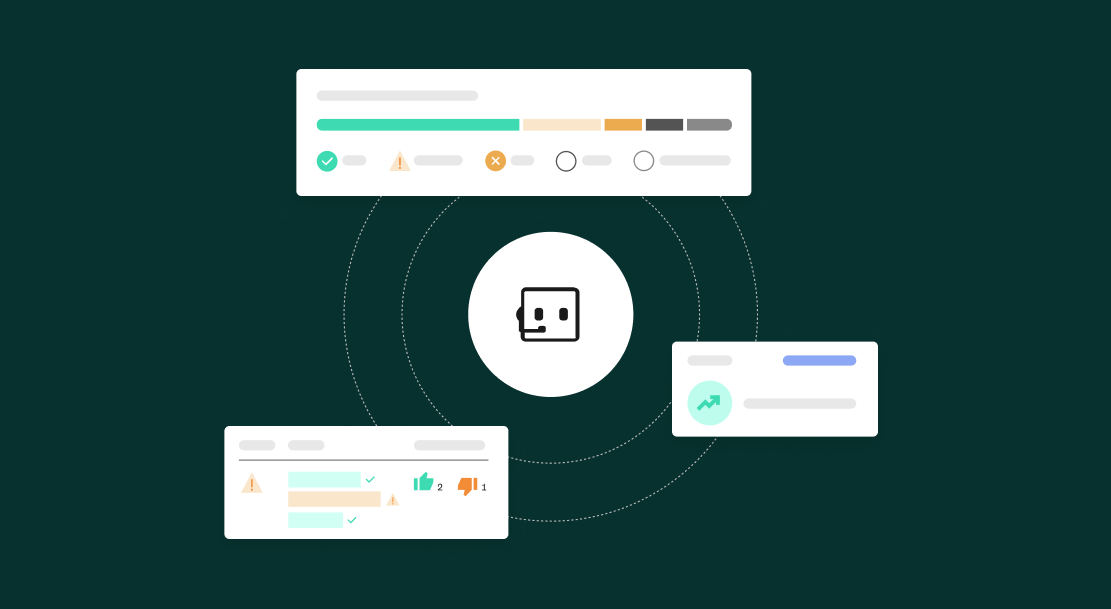
Trusted AI agents act as digital assistants that can analyze vast amounts of supplier data at scale, replicating the decision-making patterns of experienced procurement managers. They ingest structured data like delivery performance, quality scores, and contract terms, as well as unstructured data from emails, reports, and communication logs. By learning from the manager's past decisions and preferences, the AI agent can prioritize which suppliers need requalification, flag anomalies, and even suggest actions. This allows the manager to focus on exceptions and strategic decisions while the AI handles routine evaluations across all 2,000 suppliers. The result is consistent, data-driven supplier management without requiring the manager to personally review every file.
What types of data signals do AI agents use in procurement?
AI agents in procurement leverage both explicit and implicit data signals. Explicit signals include delivery trends (on-time percentage, lead times), open quality incidents (defect rates, corrective actions), and upcoming contract renewals. They also incorporate financial health indicators and compliance records. More importantly, AI agents can detect implicit signals that are often missed by traditional systems. For example, they analyze communication patterns—frequency of escalations, tone in emails, or delayed responses from suppliers. They can also learn behavioral nuances, such as a plant manager who inflates defect reports or one who minimizes issues. By combining these signals, AI agents create a holistic view of supplier risk and performance, enabling more accurate requalification decisions.
How do trusted AI agents differ from traditional automation tools?
Traditional automation tools follow rigid rules and predefined workflows, making them suitable for repetitive tasks like data entry or report generation. They lack the ability to learn from context or adapt to subtle changes. In contrast, trusted AI agents are powered by machine learning and natural language processing, allowing them to understand complex situations and make decisions with minimal human intervention. For instance, an AI agent can recognize that a supplier's increase in defect reports might be linked to a specific plant manager's reporting style rather than an actual quality drop. Traditional tools cannot discern such nuance. Moreover, AI agents improve over time by incorporating feedback from experts, effectively scaling their expertise across the entire supplier base.
What are the benefits of AI agents for mid-market manufacturers?
Mid-market manufacturers, which often have limited procurement teams relative to their supplier count, gain significant advantages from AI agents. First, they achieve comprehensive supplier oversight: all 2,000 suppliers can be monitored continuously, not just the top 200. This reduces risk from underperforming suppliers that might otherwise go unnoticed. Second, AI agents free up managers' time for strategic activities like negotiating with key suppliers or improving sourcing strategies. Third, they ensure consistency and objectivity by applying the same evaluation criteria across all suppliers, eliminating human biases. Fourth, AI agents can provide early warnings about potential disruptions, such as delivery delays or quality issues, allowing proactive mitigation. Overall, they enable mid-market companies to operate with the efficiency and insight of much larger enterprises.
How can AI agents handle subtle, undocumented supplier signals?
AI agents excel at capturing and interpreting subtle signals that remain undocumented by humans. They do this by analyzing unstructured data sources: email threads, meeting notes, phone call transcripts, and even chat logs. For example, if a plant manager frequently uses urgent language in emails about a supplier, the AI can flag a potential relationship risk. Similarly, the AI can detect patterns such as a manager consistently classifying minor issues as major defects, or another downplaying real problems. By cross-referencing these soft signals with hard data, the AI builds a nuanced risk profile for each supplier. It also learns over time from the procurement manager's reactions to such signals, refining its understanding of what truly matters. This way, the undocumented expertise is encoded into the AI, scaling it across the entire supplier portfolio.
What is the future of procurement with AI agents?
The future of procurement will be increasingly driven by AI agents that act as trusted advisors and operators. We can expect AI agents to autonomously handle routine requalifications, negotiate standard terms, and even recommend strategic sourcing decisions based on real-time market data. As AI technology advances, these agents will integrate with IoT devices to monitor supply chain conditions directly, and with blockchain to verify supplier credentials. Procurement professionals will shift from manual analysis to supervising and training AI agents, focusing on exceptions and long-term planning. The gap between the 200 suppliers a manager can handle today and the 2,000 in the portfolio will effectively close, as AI scales human expertise seamlessly. Trust and transparency in AI decisions will be key, with explainability features ensuring managers understand and trust the AI's recommendations.