Vehicle-to-Grid (V2G) Technology: Safety, Standards, and the Evolving Landscape in Australia
V2G technology turns EVs into mobile batteries, but immature Australian standards and safety concerns hinder adoption. Explore the current state, benefits, and future outlook.
Introduction
As electric vehicles (EVs) become more common, the concept of using their batteries to power homes and feed energy back to the grid—known as Vehicle-to-Grid (V2G)—has captured the imagination of consumers and energy experts alike. Interest in V2G is surging, and new products are steadily entering the market. However, for Australian drivers and energy providers, the journey from enthusiasm to everyday reality is tempered by immature standards and approval pathways. This article delves into the current state of V2G technology, explores key safety considerations, and examines what the future holds for turning electric cars into mobile batteries on wheels.
What Is V2G and How Does It Work?
Vehicle-to-Grid, or V2G, allows an electric car's battery to bidirectionally charge—meaning it can both take electricity from the grid and send it back. When connected to a compatible charger, the EV can discharge stored energy during peak demand periods, helping stabilise the grid and potentially earning the owner a financial reward. This turns a parked car into a valuable asset for the broader energy system.
Beyond V2G, there are related concepts such as V2H (Vehicle-to-Home) and V2L (Vehicle-to-Load). V2H supplies power directly to a household, while V2L provides electricity to external devices. All these rely on the same bidirectional capability, but V2G is the most grid-integrated and standardised version.
Safety: The Primary Concern for V2G Adoption
Safety is arguably the biggest hurdle for widespread V2G deployment. Several layers of protection must work flawlessly:
- Battery management systems (BMS) – Modern EV batteries are sophisticated, but repeated bidirectional cycling can stress cells. BMS software must monitor temperature, voltage, and state of charge to prevent overheating or accelerated degradation.
- Electrical isolation and grounding – V2G involves transferring high-voltage DC power to the home or grid. Ensuring proper grounding and arc-fault protection is critical to avoid shocks or fires.
- Charger and connector standards – The charger must meet relevant safety certifications (e.g., AS/NZS 3000 for Australian electrical installations). Incompatible or uncertified equipment poses severe risks.
Moreover, the interaction between the car and the grid must be tightly controlled. If a fault occurs on the grid side, the V2G system must immediately isolate the vehicle to prevent backfeeding and protect lineworkers. This requires robust communication protocols and compliance with grid interconnection standards.
The Current State of V2G Standards and Approvals in Australia
Australia’s regulatory landscape for V2G is still catching up with the technology. As noted in recent industry reports, the standards and approval pathways remain immature. Key issues include:
- No unified national standard – While the Australian Renewable Energy Agency (ARENA) has funded V2G trials, there is no comprehensive Australian standard equivalent to the global ISO 15118 for bidirectional charging. Each state may have its own interpretation, creating confusion for manufacturers and consumers.
- Grid connection approvals – Many distribution network service providers (DNSPs) lack clear guidelines for approving V2G systems. Homeowners and installers often face lengthy, case-by-case assessments.
- Warranty and insurance implications – Automakers such as Nissan and Mitsubishi have offered V2G compatibility on some models (e.g., Nissan Leaf and Outlander PHEV), but others have been cautious, fearing that grid interaction could void battery warranties. Insurers, too, are still assessing risk profiles.
Despite these challenges, progress is being made. Pilot projects in Victoria, New South Wales, and South Australia have demonstrated V2G viability, and the Clean Energy Council has begun developing industry guidelines. Yet, market players agree that a coordinated push from federal and state governments is needed to create a mature ecosystem.
Products on the Market and Consumer Interest
Consumer interest in V2G is undeniably growing. Early adopters, often called “prosumers,” are eager to maximise their EV investment. Products available in Australia include:
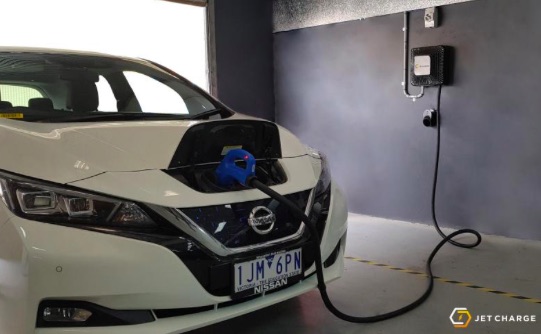
- Wallbox Quasar – A bi-directional charger compatible with CHAdeMO protocol (used by Nissan Leaf).
- Ocular Chargers – An Australian company offering V2G-capable units for home and commercial use.
- Nissan’s V2G system – Supported through partnerships with energy retailers like AGL (pilot programs).
However, the market remains niche. Limited vehicle compatibility—mainly older Leaf and Mitsubishi Outlander PHEV—restricts uptake. Newer EVs like the Hyundai Ioniq 5, Kia EV6, and Ford F-150 Lightning are starting to include bidirectional capability, but the number of approved charger models is low.
Benefits Beyond the Hype
Proponents highlight several compelling advantages:
- Grid stabilisation – EVs can absorb excess renewable energy when supply is high and release it during peaks, reducing reliance on fossil fuel peaker plants.
- Cost savings for consumers – By charging when electricity is cheap (e.g., midday solar excess) and discharging when prices are high, EV owners can lower their power bills.
- Emergency backup – V2G systems can operate in V2H mode during blackouts, providing essential power to homes.
When integrated with solar panels and home batteries, V2G completes the virtuous cycle of distributed energy resources.
Future Outlook: What Needs to Happen
To move from pilot projects to mainstream adoption, several pieces must fall into place:
- Standardisation – Adoption of ISO 15118-20 (the latest bidirectional communication standard) will ensure plug-and-play compatibility between cars and chargers.
- Regulatory clarity – Clear guidelines from the Australian Energy Market Commission (AEMC) and individual DNSPs are essential for streamlined approval.
- Industry collaboration – Automakers, charger manufacturers, utilities, and regulators must work together to define safety and interoperability criteria.
- Consumer education – Widespread awareness of benefits, risks, and costs will drive demand and help build trust.
Some experts predict that within five years, V2G will become a standard feature on new EVs sold in Australia, mirroring the trajectory of home solar and battery storage. The Australian Energy Market Operator (AEMO) has already recognised the potential for millions of EVs to act as a giant virtual power plant.
Conclusion
V2G technology holds remarkable promise for transforming electric cars into mobile energy assets. Yet, as with any disruptive innovation, the path to mass adoption is paved with challenges—especially regarding safety and regulatory maturity. In Australia, while consumer interest and new products are emerging, the current state of standards and approvals remains a bottleneck. By addressing these issues through coordinated action, the nation can harness the full potential of vehicle-to-grid systems and accelerate its clean energy transition.