Lightning's Elusive Spark: New Research Challenges Decades of Assumptions
New research by former NASA physicist Joseph Dwyer reveals that lightning's trigger is not understood, and cosmic rays may play a key role, challenging 50 years of accepted theory.
A former NASA solar physicist has upended the scientific community's understanding of lightning, revealing that the fundamental trigger for Earth's most common electrical phenomenon remains an utter mystery. Joseph Dwyer, now at the University of New Hampshire, argues that accepted theories cannot explain how lightning actually starts—and that high-energy particles from space may provide the missing spark.
"We've been looking at the wrong part of the cloud," Dwyer said in an exclusive interview. "The electric fields are far too weak to create a lightning bolt on their own. Something else has to be priming the air."
After studying solar flares using NASA's Wind satellite, Dwyer returned to Earth science in 2000 and began a series of experiments that would challenge textbook models. His work shows that cosmic rays—from the sun and beyond—may unleash cascades of runaway electrons inside thunderclouds, forcing the creation of a conductive path for lightning.
Background: The Lightning Puzzle
For decades, the standard explanation held that ice particles and updrafts inside a storm build up electric charge until the field becomes strong enough to break down air. Lightning then follows. But Dwyer and his team have measured actual electric fields inside storms and found them 10 times too weak to trigger this breakdown.
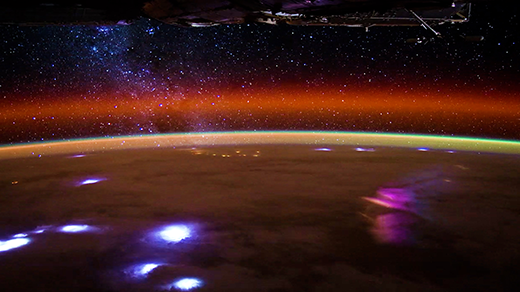
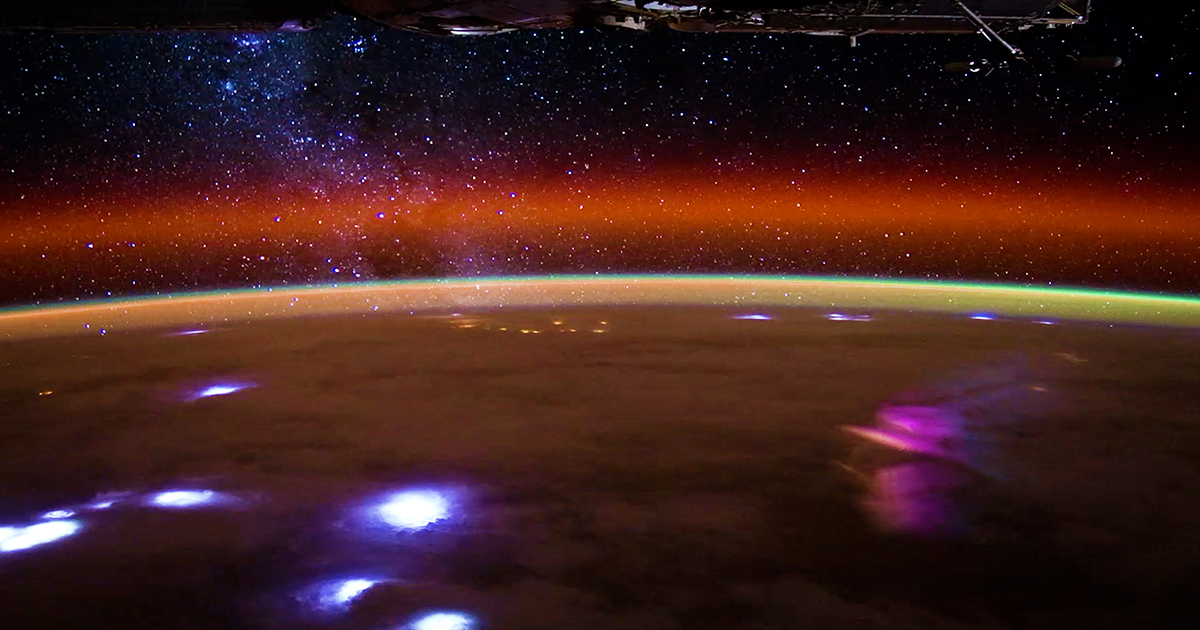
Meanwhile, satellites and ground-based detectors have recorded bursts of gamma rays and X-rays from lightning flashes—evidence of energetic particle interactions that do not fit the old model. "The atmosphere is being bombarded by cosmic rays all the time," Dwyer noted. "It turns out that might be exactly what lightning needs."
What This Means for Forecasts and Safety
If lightning is initiated by cosmic rays, then accurate prediction of severe storms may require new measurements—tracking solar activity, geomagnetic storms, and even galactic particle fluxes. Current thunderstorm warnings rely solely on meteorological data, ignoring the extraterrestrial influence.
The research also suggests that lightning-prone regions could see changes in frequency or intensity as the sun's activity varies over its 11-year cycle. Dwyer emphasized that the implications extend beyond curiosity. "If we can understand the spark, we can better protect people, aircraft, and infrastructure from one of nature's deadliest phenomena."
With each new observation, the question of what causes lightning grows stranger—and more urgent. "We used to think we had it figured out," Dwyer said. "Now we realize we've only just begun."